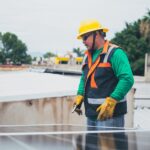
Expert Take: With the increasing prevalence of electric vehicles (EVs) being able to power homes, I firmly believe this development is a final straw for homeowners who are ready to embrace **energy independence**. The potential of combining an EV with **solar energy** systems and a **home battery** offers a robust solution to mitigate soaring **electric bill** costs and grid instability—issues we’re all too familiar with in California, Texas, Arizona, and Florida. This shift underscores the urgent need for residential energy plans that promote self-sufficiency and resilience against broader utility dynamics.
Quick Summary: Recent advancements show that specific electric vehicles can power homes effectively, increasing the feasibility of achieving energy independence for homeowners. By integrating these vehicles with solar energy systems and home batteries, households can significantly reduce their electric bills and reliance on the grid.
The Facts:
– Not all electric vehicles (EVs) can power homes; specific models have bi-directional charging capabilities.
– The ability to use an EV as a home power source can provide backup energy during outages.
– Combining an EV with solar energy systems can maximize energy independence and reduce electric bills.
– EVs can store excess energy generated from solar panels during the day for night-time use.
– This technology can alleviate pressure on the grid, particularly during peak usage times.
The Case for Energy Independence in California
In California, residents face skyrocketing rates from providers such as PG&E and SCE, whose recent rate hikes can reach up to 30% over two years. Additionally, frequent rotating blackouts and wildfire-related outages exacerbate the urgency for homeowners to seek alternatives. The integration of EVs with solar energy systems and home batteries provides a potential lifeline. By channeling energy generated from solar panels into vehicle batteries during the day, homeowners can drastically reduce their dependence on the traditional grid. This means less stress on personal finances, especially given that average electric bills are already over $200 per month.
Implications for Texas Homeowners
In Texas, ERCOT’s warnings about grid resistance and capacity limits are becoming a significant concern. The hot summers lead to extreme electric consumption, with the average Texan recently paying upwards of $250 for their electric bill. However, with the proper EV setup, homeowners can easily employ bi-directional charging systems that allow their vehicles to act as power sources during peak demand times. Taking this route can not only promote **energy independence**, but it can also help avoid being at the mercy of fluctuating utility rates—an attractive prospect given the dramatic swings in ERCOT’s pricing. Moreover, home battery systems paired with solar energy allow homeowners to store energy from their EVs for later use, creating a self-sustaining cycle that could fundamentally alter Texas energy dynamics.
Arizona’s Transition Towards Resilience
Arizona homeowners are sitting at the forefront of solar energy adoption, with many households already equipped with solar panels. However, they face high summer bills due to high temperatures leading to increased electricity consumption. By leveraging EV technology, residents can further enhance their energy systems. The combination of a home battery and solar panels allows for energy storage during daylight hours, which can subsequently power homes through the evening and nighttime hours when energy prices are higher. Furthermore, this innovative use of EVs aligns with APS’s encouraging solar policies, especially as customers look for ways to mitigate high utility rates, which average around $180 per month.
Florida’s Solar Landscape and Energy Storage
In Florida, innovative policies surrounding solar energy are being embraced, but the implementation of home batteries remains critical. With the state’s initiative for generating solar energy climbing, residents are actively seeking ways to optimize their systems. By utilizing EVs as temporary power reserves can be a game-changer, especially in regions like Miami, where electric bills can break the $220 mark. Homeowners can create personal energy reserves while complying with Florida Power and Light’s net metering policies, thus ensuring they don’t just store energy but also can return energy back to the grid for a potential reduction on their electric bills. This strategy serves to promote energy resiliency, especially during hurricane season when grid reliance can falter.
Can any electric vehicle power my home?
No, not all electric vehicles are equipped with bi-directional charging capabilities that allow them to send power back to a home. Only specific models have this technology.
What are the financial benefits of using an EV as a home power source?
Using an EV connected to a solar energy system can drastically reduce your monthly electric bill by storing and utilizing energy during peak hours. Additionally, it mitigates costs during power outages.
How can I integrate my EV with my solar energy system?
Integrating your EV with a solar energy system typically requires a compatible home battery and a specific inverter technology that supports bi-directional charging to maximize energy efficiency.